Atlanta Locations

Suwanee GA Exhibit Planning for Gwinnett Corridor Events

Atlanta booth planning, fabrication, logistics, and show-floor control.

Strategic coordination for custom exhibits targeting corporate, association, and community events in the northeast Atlanta suburban zone led by the Duluth and Gwinnett venue cluster.

Corridorthe north and Gwinnett corridor
Main concernFreight timing, labor access, and venue fit
Ideal outcomeClean setup, steady show days, and reusable assets

Suwanee's Place in Atlanta's Four-Zone Trade Show Geography

Atlanta's convention demand distributes across four operationally distinct zones rather than concentrating in a single core. Downtown remains the flagship district through the interconnected facilities of the Georgia World Congress Center, Centennial Olympic Park, and AmericasMart, which together support large-scale exhibits, buyer showrooms, and high-traffic activations. The airport corridor, led by the Georgia International Convention Center with its SkyTrain linkage, prioritizes fly-in convenience for national associations and transient corporate groups.

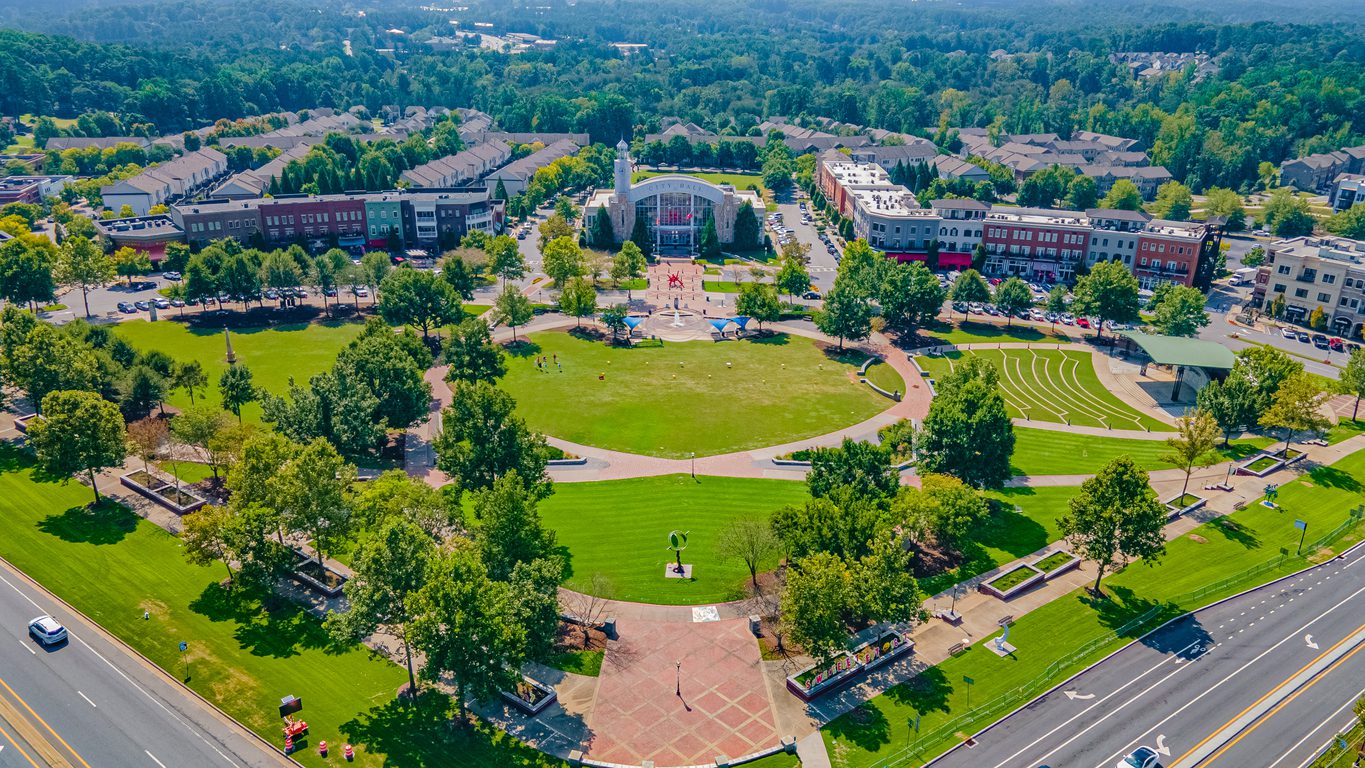
Northwest suburban activity centers on the Cobb Convention Center while the northeast, including the Duluth and Gwinnett corridor that encompasses Suwanee, leverages Gas South Convention Center for corporate, association, and community programming. This distribution pattern allows exhibitors to select venues according to target demographics, with the northeast zone capturing professionals who prefer shorter commutes and campus-style environments over urban intensity.

Planning resources must therefore address zone-specific variables such as dock access, rigging points, and audience dwell time rather than applying uniform downtown templates. Suwanee exhibitors benefit from strategies that recognize the corridor's emphasis on functional elegance and sustained interaction over dramatic scale.
Gas South Convention Center and Northeast Corridor Venue Dynamics

Gas South Convention Center functions as the primary driver of exhibit demand in the Duluth-Gwinnett sector, capturing events that prioritize accessibility from Suwanee, Johns Creek, and surrounding communities. Its configuration supports both theater-style general sessions and exhibit halls that favor modular island and peninsula footprints rather than the linear row setups common in denser downtown environments.

Exhibitors benefit from recognizing how this venue's operational cadence differs from the Georgia World Congress Center's multi-hall complexity or the Georgia International Convention Center's emphasis on concurrent breakout efficiency. Coordination involves precise attention to load-in sequencing, electrical specifications, and audiovisual integration points documented in official planning guides.

Successful programs in this corridor frequently blend trade show elements with educational programming, requiring exhibits that function as both product showcases and interactive learning stations. This hybrid format distinguishes northeast suburban events from the pure transaction focus sometimes seen at AmericasMart buyer sessions.

Custom Fabrication Approaches for Suburban Atlanta Programs

Fabrication capabilities become central when exhibits must travel between Atlanta's varied zones while maintaining structural integrity and visual consistency. Designs serving Suwanee and Gwinnett events often incorporate lightweight yet robust aluminum framing systems that accommodate both the higher ceilings at Gas South and the more constrained dock clearances found at certain suburban campuses.

Attention to graphic application techniques that resist fading under extended show schedules helps preserve brand impact across multi-day association meetings. Storage and refurbishment protocols should be established early since northeast corridor events frequently recur on annual cycles with incremental theme adjustments rather than complete redesigns.

The emphasis remains on engineering exhibits that solve specific venue challenges while advancing overarching brand objectives. This includes selecting materials that balance visual sophistication with the practical requirements of frequent transportation between the four Atlanta operating zones.

Detailed pre-production reviews of floor plans from target venues prevent last-stage modifications that compress timelines and inflate costs.

Coordinating Across Atlanta's Distinct Event Submarkets

Exhibitors active throughout greater Atlanta quickly discover that each zone operates with its own rhythm, audience expectations, and logistical norms. Downtown activations at the Georgia World Congress Center often demand larger-scale environmental branding to compete with surrounding stimulation, while northeast suburban programs at Gas South allow for more conversational booth designs that encourage extended consultations.

Airport corridor events near the Gateway Center Arena emphasize quick-setup solutions for time-pressed attendees arriving via ATL SkyTrain. Effective coordination therefore involves creating a master calendar that identifies complementary shows across these clusters rather than treating each in isolation.

Resource allocation becomes more efficient when fabrication decisions account for multiple appearances within a single quarter. A single custom system can be reconfigured with different graphic skins and accessory elements to address the specific priorities of downtown, airport, Cobb, and Gwinnett venues without requiring full reconstruction.

Audience Engagement and Measurement in the Gwinnett Corridor

Corporate and association attendees in the northeast suburbs typically arrive with different priorities than those visiting downtown Atlanta's Centennial Olympic Park activations or AmericasMart showrooms. Programs in Suwanee and surrounding communities reward exhibits that facilitate substantive dialogue supported by interactive demonstrations rather than purely theatrical presentations.

Lead capture strategies should align with the extended session times common in Gwinnett venues, allowing deeper discovery conversations that convert more effectively into post-event pipeline activity. Digital integration that captures both contact information and specific interest data helps quantify performance against the distinct objectives of suburban versus urban events.

Post-event analysis frameworks that segment results by zone provide clearer insight into which exhibit elements perform best within the northeast corridor compared to airport or downtown environments. This data-driven refinement process elevates long-term program effectiveness across Atlanta's full spectrum of venues.

Strategic Calendar Alignment for Northeast Suburban Participation

Atlanta's overall convention calendar features overlapping activity across its four operating zones, requiring intentional scheduling to avoid resource conflicts while maximizing presence where target audiences concentrate. The Gwinnett corridor maintains its own rhythm of corporate summits, regional association conferences, and community expos that frequently align with but do not duplicate downtown peaks.

Early identification of recurring events at Gas South Convention Center allows sufficient lead time for custom fabrication and iterative design reviews. Coordination with the broader Georgia World Congress Center and Georgia International Convention Center schedules ensures complementary rather than competitive positioning throughout the year.

This systems-level approach to calendar management distinguishes sophisticated exhibitors who treat greater Atlanta as an integrated ecosystem from those who book venues opportunistically. The resulting programs achieve both geographic coverage and thematic consistency while respecting the operational individuality of each submarket.

Preparing Exhibits for Multi-Venue Atlanta Campaigns

Brands that activate across Suwanee, downtown Atlanta, the airport corridor, and Cobb simultaneously require exhibit systems engineered for adaptability rather than single-purpose use. Planning begins with comprehensive review of technical specifications from representative venues including floor loading capacities, power distribution, and rigging options.

Successful campaigns maintain core brand architecture while incorporating zone-specific modifications that respond to documented differences in audience behavior and hall configuration. This approach reduces overall fabrication investment while increasing the number of qualified touchpoints throughout the Atlanta market.

Documentation of each setup's performance metrics creates institutional knowledge that compounds value over successive years. What succeeds in the more spacious northeast suburban halls may require scaling adjustments for denser downtown environments, and systematic tracking makes these translations more precise.

Questions teams ask before they lock the brief

How does exhibiting in Suwanee differ from downtown Atlanta conventions?

The northeast suburban corridor including Suwanee emphasizes corporate and association events at venues such as Gas South Convention Center, where booth designs favor conversational depth and extended consultations over the high-density, high-stimulation approaches required near the Georgia World Congress Center and Centennial Olympic Park.

What venue specifications should guide exhibit design for the Gwinnett area?

Gas South Convention Center floor plans, ceiling heights, and dock configurations set primary parameters. Designs must also anticipate the operational differences between this northeast zone and Atlanta's airport, Cobb, and downtown clusters to maintain efficiency across multiple appearances.

Why does Atlanta's trade show market operate across four distinct zones?

Demand naturally splits between downtown's dense convention campus, airport-adjacent facilities optimized for fly-in access, northwest suburban venues, and the Duluth-Gwinnett corridor that serves northeast corporate and community audiences. Each zone maintains independent calendars and audience profiles.

How should fabrication decisions account for multiple Atlanta submarkets?

Systems engineered with modular components and interchangeable graphics allow one core structure to be adapted for the specific technical and audience requirements of downtown, airport, Cobb, and Gwinnett venues without repeated full builds.

What metrics matter most for events in the northeast suburban corridor?

Quality of leads from extended consultations, alignment with corporate or association objectives, and post-event pipeline conversion typically outweigh sheer traffic volume when measuring success at Gas South and similar Gwinnett facilities.

When should planning begin for Suwanee-area trade shows?

Early alignment with recurring Gas South Convention Center and regional Gwinnett event calendars provides adequate time for custom fabrication, zone-specific modifications, and integration with broader Atlanta scheduling across all four operating zones.

Related topics that shape the same decision

36 Atlanta-focused locations topics support real buyer decisions around design, labor, freight, venue fit, graphics, and post-show value.