Which Atlanta venues best suit large-scale retail trade shows?
Georgia World Congress Center excels for expansive retail conventions with its multi-hall capacity, while AmericasMart Atlanta dominates market-week formats for buyer showroom rotations.

Atlanta Industries
Atlanta stands as a pivotal hub for retail and ecommerce exhibitors seeking to capture buyer attention amid the city's dynamic convention landscape, where coordinated exhibit solutions bridge downtown market weeks, airport fly-in gatherings, and suburban trade platforms.
AmericasMart Atlanta serves as the epicenter for retail market weeks, where exhibitors rotate through dedicated floors for apparel, giftware, and home decor buyers during compressed Three to Five Day cycles. Coordinating booth setups here demands foresight into permanent showroom integrations, where temporary exhibit elements overlay existing fixtures without disrupting baseline displays. Planners must account for the venue's vertical campus layout, positioning retail stands on lower levels for high-traffic casual browsing and upper floors for appointment-based wholesale negotiations.
Exhibit coordination emphasizes modular shelving that accommodates varying product heights—from tabletop ecommerce gadgets to full-height apparel racks—while adhering to the mart's strict move-in windows that precede dawn buyer arrivals. Ecommerce brands particularly benefit from integrating QR-driven digital catalogs into physical displays, allowing smooth transitions from booth interactions to online order portals during peak sessions.
The Georgia World Congress Center's sprawling exhibit halls host major retail trade shows that attract thousands of attendees, requiring booth designs that scale from 10x10 footprints to island configurations spanning hundreds of square feet. Coordination involves synchronizing with GWCC's phased load-in schedules, where freight elevators prioritize larger retail installations early in the setup phase to avoid bottlenecks during peak convention hours.
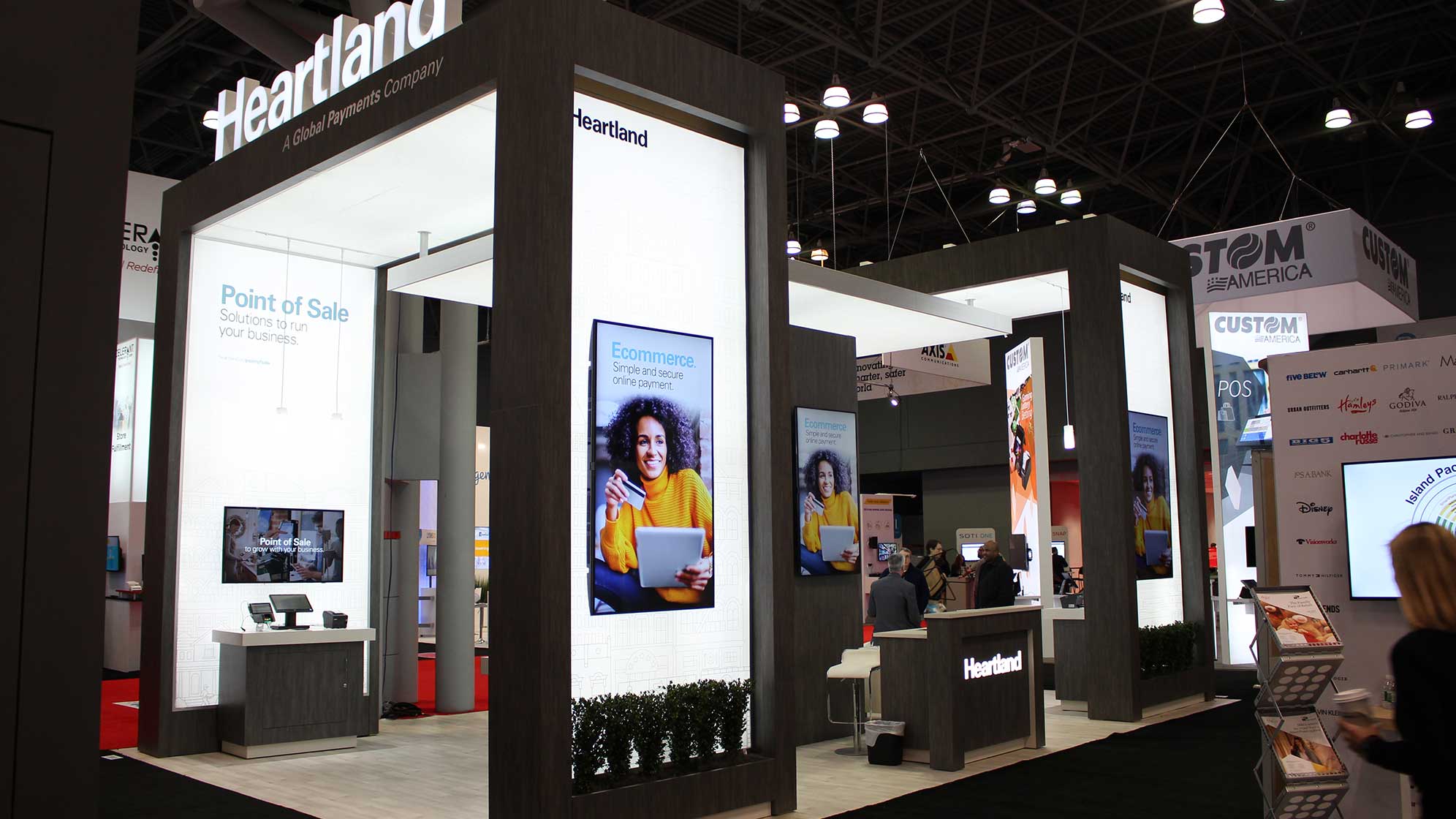
Retail exhibitors focus on high-visibility elements like illuminated product towers and curved wall systems that frame merchandise against the center's neutral hall backdrops, enhancing perceived value for bulk buyers. Ecommerce integration shines through embedded charging stations and VR headset mounts that simulate warehouse fulfillment processes, drawing decision-makers into immersive purchasing discussions amid the convention's busy pathways.
Georgia International Convention Center and Gateway Center Arena in College Park capitalize on Atlanta's airport proximity, hosting ecommerce logistics forums and retail supply chain summits where Out of Town buyers prioritize efficiency. Booth planning here stresses compact, high-impact designs that assemble within the venues' abbreviated setup timelines, often compressed by SkyTrain-dependent vendor flows and arena event overlaps.
Ecommerce-focused exhibits deploy rolling demo carts for agile repositioning across GICC's flexible ballroom-exhibit hybrids, showcasing fulfillment software alongside physical prototypes. Retail pop-ups at Gateway leverage adjacent arena energy for product launch activations, incorporating branded seating pods that encourage prolonged buyer engagement post-session.
Coordination across these sites anticipates rapid turnover, with disassemble protocols aligned to airport departure peaks, ensuring exhibits vacate promptly without stranding freight in transit corridors.
Cobb Convention Center in the Cumberland area draws mid-sized retail expos and ecommerce networking events, utilizing its ballroom configurations for hybrid booth-lounge hybrids that foster deal-closing conversations. Planners coordinate entrances that align with northwest submarket parking flows, positioning displays near escalators for maximum regional buyer exposure without downtown congestion.
Further northeast, Gas South Convention Center in Gwinnett supports community retail fairs and ecommerce workshops, where exhibit setups emphasize accessibility for local vendors through ground-level load-ins and ample rigging points for suspended banners. Retail brands adapt by deploying perimeter-hung product grids that maximize vertical space in these mid-tier halls, complementing table-top demos for hands-on sampling.
Unified planning across suburban venues streamlines multi-site campaigns, timing installations to venue-specific contractor bids and union rules that vary from downtown protocols.
Centennial Olympic Park offers unparalleled outdoor retail experiences tied to GWCC conventions, where temporary structures create branded villages amid public pathways. Coordination focuses on wind-resistant frameworks that support fabric canopies over product islands, drawing foot traffic from park visitors into exhibit zones for impulse-driven ecommerce trials.
Retail pop-ups here integrate misting stations and interactive kiosks for summer market weeks, simulating store environments that highlight sensory product features like textures and scents unavailable in digital catalogs. Planners must navigate park permitting cycles, securing power drops from GWCC adjacency while positioning for optimal sightlines to convention entrances.
These activations amplify booth ROI by extending reach beyond hall confines, funneling warmed leads back to core exhibits with coordinated pathway signage.
Atlanta's dispersed venue clusters necessitate sophisticated logistics orchestration for retail and ecommerce exhibitors running parallel activations. From downtown's MARTA-fed GWCC loads to GICC's SkyTrain-timed arrivals, planning sequences freight routing through I-85 and I-285 corridors, buffering for peak-hour restrictions that impact College Park and Cobb deliveries.
Ecommerce brands gain edge with synchronized inventory pods that shuttle between AmericasMart showroom boosts and Gas South regional pushes, minimizing downtime via pre-kitted booth cores. Retail coordination emphasizes compliance documentation packets tailored to each zone's inspector rounds, covering flammability certs for fabrics and load ratings for shelving amid varying enforcement.
This zonal mastery ensures campaign continuity, where insights from one venue refine tactics at the next without redundant setups.
Georgia World Congress Center excels for expansive retail conventions with its multi-hall capacity, while AmericasMart Atlanta dominates market-week formats for buyer showroom rotations.
Georgia International Convention Center and Gateway Center Arena leverage SkyTrain access for fly-in logistics conferences, enabling compact booths that prioritize demo efficiency over scale.
Cobb Convention Center handles northwest corporate retail gatherings in ballroom setups, complemented by Gas South Convention Center's Gwinnett accessibility for community ecommerce fairs.
Centennial Olympic Park facilitates experiential retail pop-ups adjacent to GWCC, using weather-proof structures for public engagement that funnels traffic to indoor booths.
Align load-ins with zone-specific transit like MARTA downtown, SkyTrain at airport sites, and highway access for Cobb and Gwinnett, sequencing multi-site campaigns for optimal timing.
Modular shelving for product variety, integrated AV for ecommerce demos, and lounge integrations for negotiation spaces tailored to venue footprints.